
HomeBlog7×9 MDF Board vs 4×8 MDF Board
Product Comparison June 2026 6 min read
7×9 MDF Board vs 4×8 MDF Board: Which Size Is Better for Furniture Manufacturing?
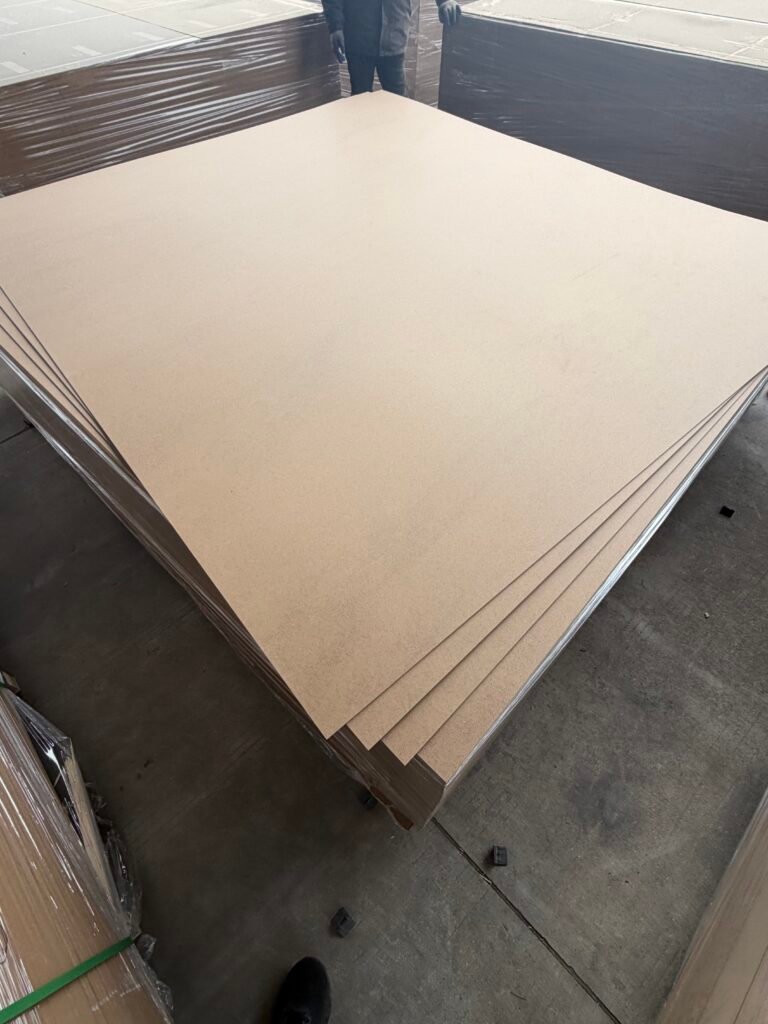
Medium Density Fiberboard (MDF) is one of the most widely used engineered wood products in furniture manufacturing and interior decoration. While the standard 4×8 ft (1220 x 2440 mm) MDF board remains the most common choice worldwide, large-size MDF boards such as 7×9 ft (2135 x 2745 mm) are becoming increasingly popular among furniture factories and panel processors.
But which size is better for your production needs?
In this article, we compare 7×9 MDF boards and traditional 4×8 MDF boards in terms of material utilization, production efficiency, transportation, and application scenarios.
Understanding the Two MDF Board Sizes
Before diving into the comparison, it is important to understand the dimensional differences between these two MDF board formats. The difference in surface area has significant implications for production planning, cutting optimization, and material yield.
Standard MDF Board
4 x 8 ft
1220 x 2440 mm
Surface Area: 2.98 m²
Large Size MDF Board
7 x 9 ft
2135 x 2745 mm
Surface Area: 5.86 m² (nearly 2x)
The large format 7×9 MDF board covers nearly twice the surface area of a standard 4×8 board. This fundamental difference drives most of the advantages and trade-offs discussed in the sections below.
Material Utilization Comparison Winner: 7×9
Material utilization rate is one of the most critical metrics for furniture manufacturers. It directly impacts cost per finished piece, waste management, and overall factory profitability.
With a 4×8 MDF board, cutting yield optimization is limited by the relatively small surface area. When cutting larger furniture components such as wardrobe side panels, bed headboards, or kitchen cabinet doors, the constraints of a 1220 mm width and 2440 mm length often lead to substantial offcut waste. Industry data suggests that the typical material utilization rate for 4×8 boards ranges between 75% and 82% in most standard furniture production lines.
In contrast, the 7×9 MDF board with its 2135 x 2745 mm dimensions provides significantly more flexibility for nesting and cutting pattern optimization. The larger surface area allows a single board to accommodate more components, reducing offcut generation. Factories using 7×9 boards commonly achieve utilization rates of 88% to 95%, depending on the product mix and cutting software employed.
The difference becomes especially pronounced when producing large-format furniture like floor-to-ceiling wardrobes or hotel project casegoods, where individual component dimensions often exceed what a 4×8 sheet can efficiently accommodate.
Production Efficiency Winner: 7×9
Production efficiency in furniture manufacturing is measured by throughput—how many finished pieces a factory can produce in a given time period. The board size directly influences handling frequency, machine loading cycles, and operator time per unit.
For the same finished product volume, a factory using 7×9 MDF boards handles approximately half as many individual sheets compared to a factory using 4×8 boards. This translates to:
- Fewer loading/unloading cycles on CNC routers and panel saws
- Reduced operator fatigue from repetitive material handling (paradoxically, fewer but larger sheets can be less tiring than many smaller sheets)
- Lower machine idle time between sheet changes
- Streamlined production flow with fewer interruptions
However, it is worth noting that 7×9 boards require material handling equipment such as vacuum lifters or panel handling systems, as manual handling of a full-size 7×9 MDF sheet by a single operator is neither safe nor practical. Factories without such equipment may find the transition challenging.
Surface Appearance and Design Flexibility Winner: 7×9
One of the most compelling advantages of large-format MDF boards lies in aesthetics and design flexibility. The larger surface area of the 7×9 board enables the production of furniture components with fewer or no visible joints, which is a significant selling point in premium furniture markets.
Key design advantages include:
- Seamless panels: Full-height wardrobe doors, conference tables, and reception desks can be produced from a single board without the need for joining multiple pieces
- Consistent grain/pattern: When using decorative melamine-faced or UV-coated MDF, the uniform surface across a larger area provides a more premium visual result
- Greater design freedom: Designers can specify larger component sizes without worrying about joint locations or mismatched grain patterns
- Architectural applications: Large format panels are ideal for wall cladding and ceiling panels in commercial and hospitality projects
For high-end furniture manufacturers targeting the European, North American, or Middle Eastern luxury markets, the seamless appearance achievable with 7×9 boards can be a key differentiator against competitors still using 4×8 boards.
Transportation and Handling Winner: 4×8
This is the one area where the 4×8 format maintains a clear advantage. The logistics of transporting and handling large-format panels present real challenges that factories must account for:
- Container loading: A standard 40-foot high-cube container can accommodate approximately 20% to 25% fewer 7×9 boards compared to 4×8 boards when measured by volume efficiency, due to the non-standard dimensions of the larger format
- Weight per sheet: A 7×9 MDF board at 18 mm thickness weighs approximately 68-75 kg, compared to roughly 35-40 kg for a 4×8 board of the same thickness. This requires mechanical lifting equipment at every handling point
- Storage footprint: Warehouses need wider aisles and larger rack dimensions to store 7×9 boards
- Shipping cost: The higher per-board freight cost can partially offset the production efficiency gains, particularly for smaller order volumes
However, for large-volume buyers who ship full container loads, the transportation cost per square meter of finished product is often comparable. The real logistics premium for 7×9 boards primarily affects small and medium-sized orders.
Cost Considerations Depends on Scale
The cost comparison between 4×8 and 7×9 MDF boards is nuanced and depends heavily on the production scale and specific application context.
Per-square-meter pricing: 7×9 MDF boards typically carry a 5% to 15% price premium on a per-square-meter basis compared to 4×8 boards. This premium reflects the more complex manufacturing process, higher quality requirements for large-format pressing, and lower production volumes relative to the standard size.
Total cost of production: Despite the higher per-square-meter material cost, the total production cost per finished furniture piece often favors the 7×9 format due to:
- Higher material utilization (less waste)
- Reduced labor cost per unit
- Lower machine operating cost per unit
- Reduced edge banding and finishing labor (fewer joints)
Recommendation by production scale:
- High-volume manufacturers (1,000+ boards per month): The 7×9 format typically delivers 8% to 15% lower total production cost per piece despite the higher material price, making it the economically superior choice
- Medium-volume manufacturers (200-1,000 boards per month): Either format can be cost-effective depending on the specific product mix and factory layout
- Low-volume manufacturers (<200 boards per month): The 4×8 format is usually more economical due to lower material premium, simpler logistics, and reduced working capital tied up in inventory
Typical Applications
The two board sizes serve overlapping but distinct application niches. The following comparison highlights where each format excels:
4×8 Best For
- Small to medium cabinet doors
- Standard kitchen cabinet boxes
- Shelf units and bookcases
- Office desk components
- Small-batch custom furniture
- DIY and retail panel sales
- Drawer components
- Speaker and electronics enclosures
7×9 Best For
- Floor-to-ceiling wardrobe panels
- Hotel project furniture (mass production)
- Large conference and dining tables
- Reception desks and counters
- Wall paneling and cladding systems
- Kitchen islands and large peninsula tops
- Store fixture and retail display systems
- Architectural millwork (large format)
Comparison Table: 4×8 vs 7×9 MDF Board
| Feature | 4×8 MDF Board | 7×9 MDF Board |
|---|---|---|
| Dimensions (Imperial) | 4 ft x 8 ft | 7 ft x 9 ft |
| Dimensions (Metric) | 1220 x 2440 mm | 2135 x 2745 mm |
| Surface Area | 2.98 m² | 5.86 m² (nearly 2x) |
| Weight (18 mm thickness) | ~35-40 kg | ~68-75 kg |
| Material Utilization | 75% – 82% | 88% – 95% |
| Handling Equipment Needed | Manual (1-2 operators) | Mechanical lifters recommended |
| Container Loading Efficiency | Higher per-volume efficiency | ~20-25% fewer boards per container |
| Per m² Price | Lower (baseline) | 5% – 15% premium |
| Best for Production Scale | Small to medium volume | Medium to high volume |
| Joint Appearance | Visible joints on large furniture | Seamless on most furniture pieces |
| Market Availability | Widely available globally | Limited to specialized suppliers |
| Thickness Range | 2.5 mm – 30 mm | 6 mm – 25 mm (common: 9-18 mm) |
Conclusion: Which MDF Board Size Should You Choose?
There is no universal answer; the right choice depends on your production volume, product range, and factory capabilities. However, some clear patterns emerge from this analysis:
Summary of Recommendations
Choose 7×9 MDF boards if: You are a medium-to-large volume manufacturer producing large furniture components, hotel project furniture, or premium seamless-panel products. The higher material utilization, better production efficiency, and superior aesthetic outcome justify the logistics investment.
Choose 4×8 MDF boards if: You are a small-to-medium volume manufacturer, produce standard-sized components, or have limited material handling equipment. The 4×8 format offers superior logistics convenience, wider availability, and lower upfront material cost.
Consider a hybrid approach: Many successful furniture factories stock both sizes. They use 7×9 boards for large components (wardrobe sides, bed panels, large table tops) and 4×8 boards for smaller components (drawers, shelves, cabinet doors). This hybrid strategy maximizes the advantages of both formats while minimizing their respective drawbacks.
At MASEN, we supply both standard 4×8 MDF boards and large-format 7×9 MDF boards in raw, melamine-faced, and UV-coated varieties. Our Jumbo MDF line is manufactured on state-of-the-art continuous pressing lines with consistent density profiles and superior surface quality. Whether you need a single container or regular bulk shipments, we can help you determine the optimal format for your specific production needs.
Get a Quote for Your Board Requirements
Ready to Start Your Project?
Request free samples today and experience the MASEN difference. Our team is ready to help you find the perfect board solution for your business.